
Our Story
Matt had been documenting large pelagic animals since 2016, humpbacks first, then anything that would let him close enough. After building One With Whales in Polynesia he went looking for other species. In 2023 a broken hydrophone wrecked a trip in St Vincent and sent him to Dominica, where he met Andrew Armour, who has spent his working life with the sperm whales.
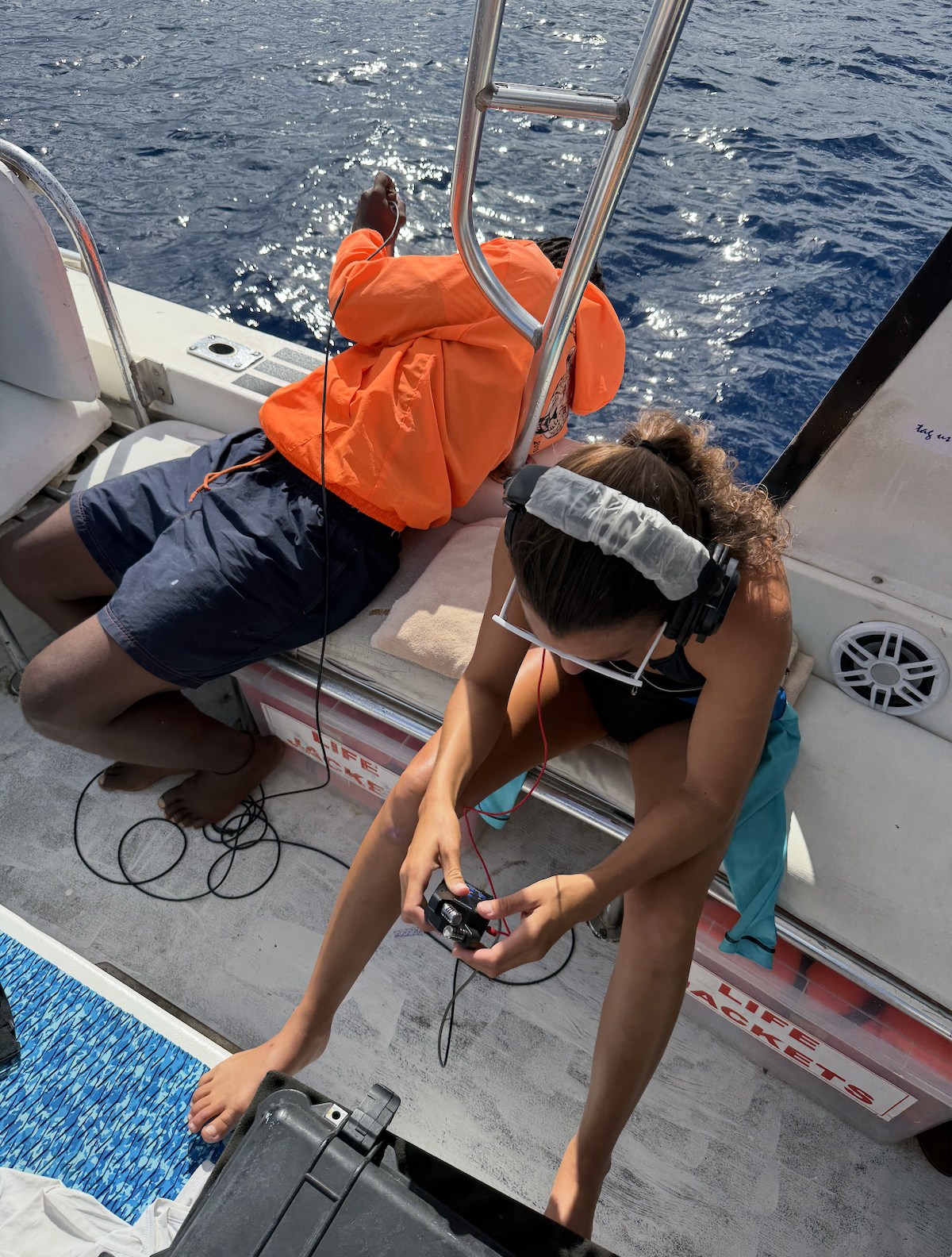
Sam came at it from the other side. A New Jersey native, she was on the island finishing a veterinary degree and writing her thesis on sperm whales, collecting samples and running hydrophones. She is, as far as anyone can establish, the only foreigner in Dominica qualified to guide, and certainly the only one who has mastered the hydrophone. Roughly 90% of finding a sperm whale is done by ear. Andrew took her under his wing and taught her the rest.
What actually built Big Tooth was the seasons in between. Dominica is a community before it is a destination: a handful of boats, a small number of coveted and costly swim-with permits, and a very long memory. Learning who is who, who dislikes who on which day of the week, and who picks up the phone in a squall takes years nobody can shortcut. It is half the job.
We don't call it The Real Housewives of Dominica for no reason. The boat was leaving at eight’ it is ten. The engine was rebuilt overnight in a shanty. Two captains are screaming at each other across 60 metres of water. A captain dumps their guests in the water to take fluke shots. It was Carnival last night and no deckhands showed up to work... Then the first click comes through the headphones and none of it matters. These guys can find a forty-tonne animal by ear, and they love these whales like family.
It is also why Big Tooth is not built around one boat. We work with captains across the island and now the region, we know how the permit system moves through a season, and we document the same animals year after year. Conditions change. We are not stuck.
We went all in on one species because none of us could stop. Just this goofy, incredible, brilliant animal, done properly with full passion.
Testimonials
“We had a fabulous trip in Dominica swimming with sperm whales. We swam with whales 5/5 days! What fabulous creatures. Elias was a fantastic guide. We appreciated his enthusiasm and knowledge base. Elias gave us two powerpoint presentations on whales which were fun and informative. Great job!”
Deb Raehl
“I went on the Dominica trip to swim with sperm whales through One Xpeditions. It was truly an amazing experience. They go out of their way to make sure everyone has a great time and that the animals are respected throughout the process. Jamie was my group’s guide and he was incredible. His experience and passion for the whales and for sharing this world with those of us just dipping our toes into it (excuse the pun) made the trip better than I had hoped for. I would strongly recommend One Xpeditions for any of their experiences.”
Josh Argentine
Our team
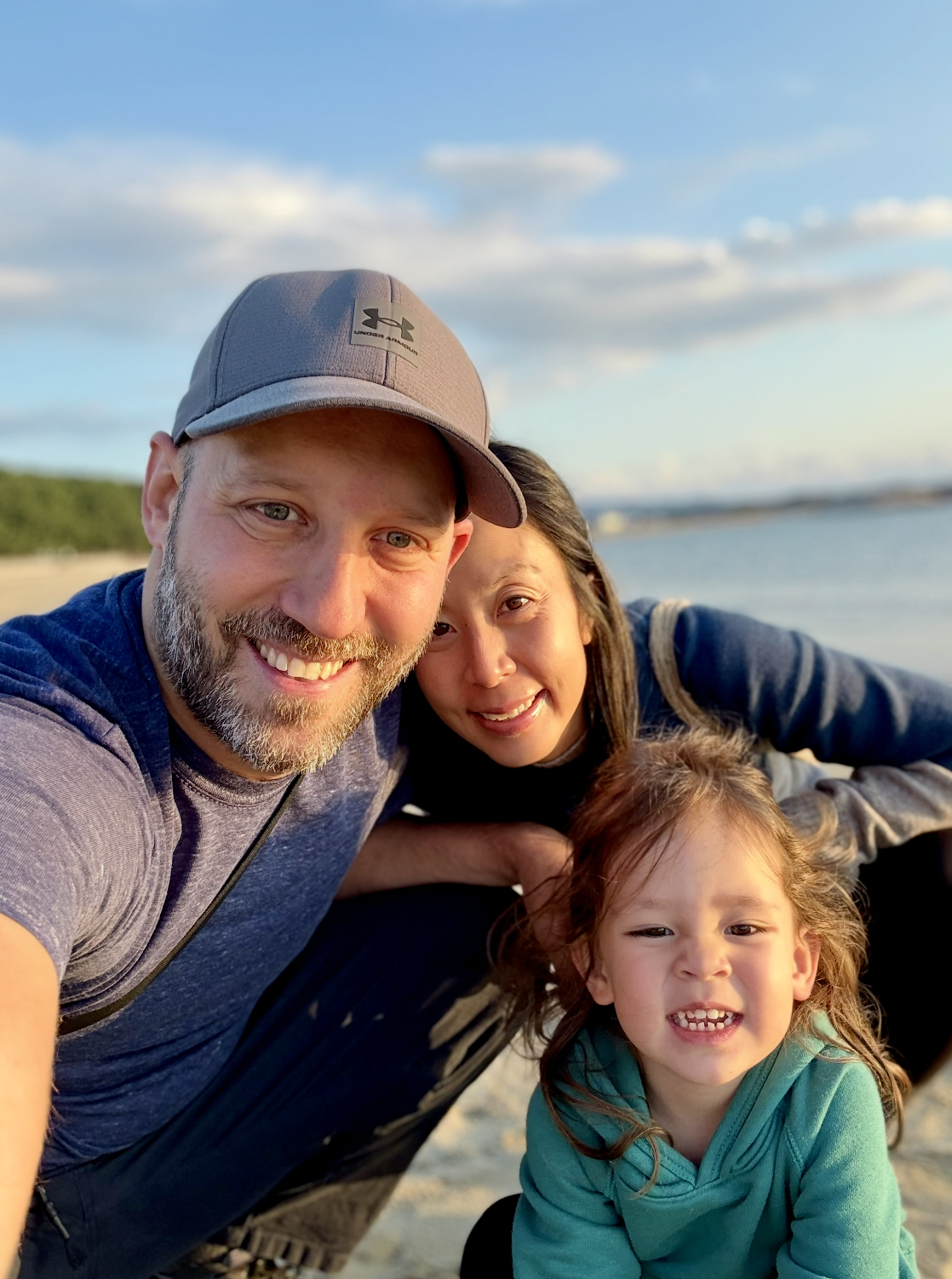
Matt Reichel
Admin and Expedition lead
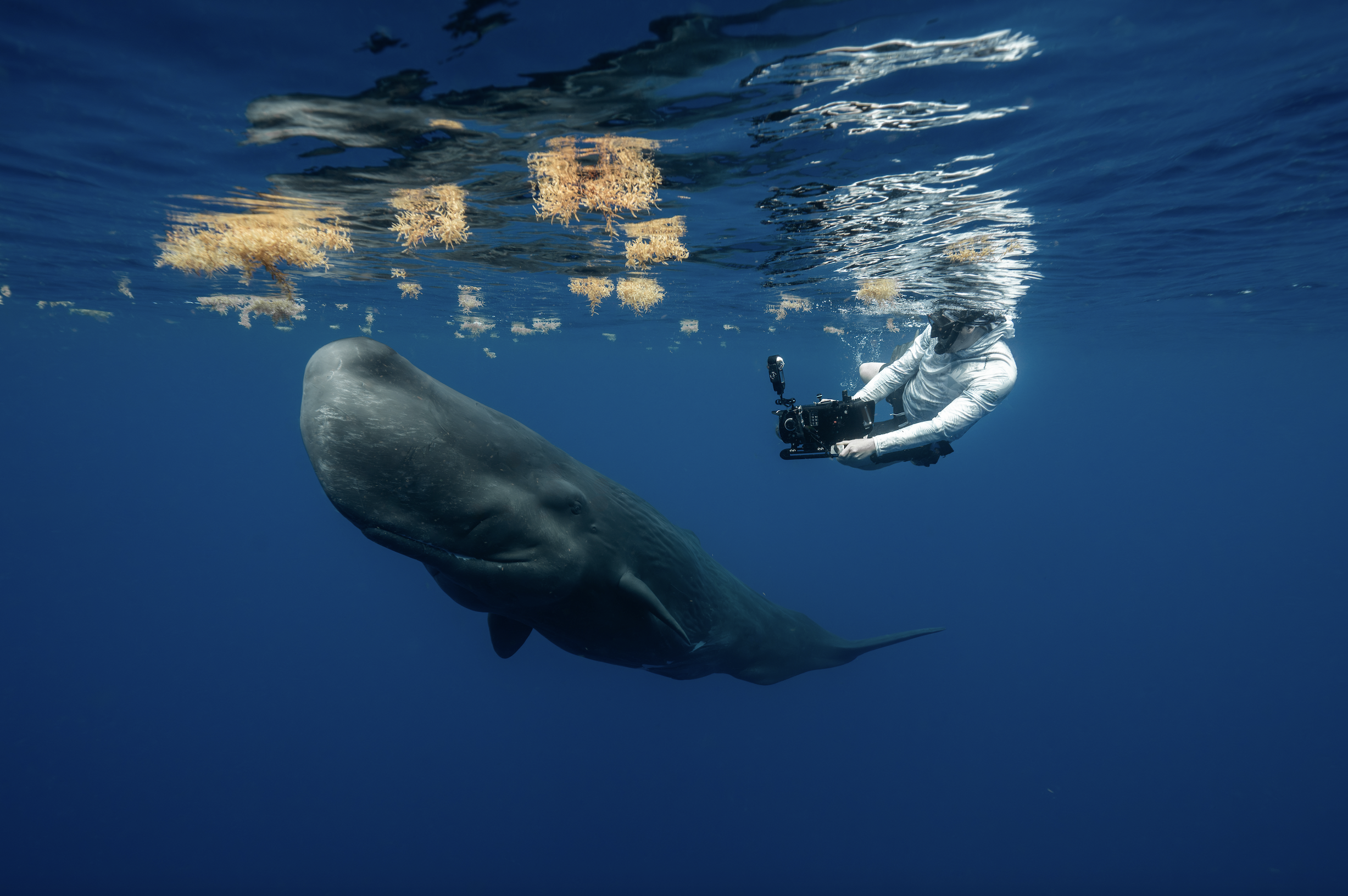
Matt is a Canadian-Mexican photographer and expedition coordinator. His work has taken him from Kandahar to Nuuk, and he has been guiding whale trips for over a decade. He founded One With Whales in Rurutu in 2019, and started running Dominica shortly after. He is also one of our whale guides, teaching photography (just about all the whale images on this website were taken by him), which in practice means telling people to put the camera down for the first encounter. He is fluent in English, Spanish, Chinese, and French, and lives between Mexico and Canada. As a full-time dad, he now handles all the admin, but still comes out to guide when he can.
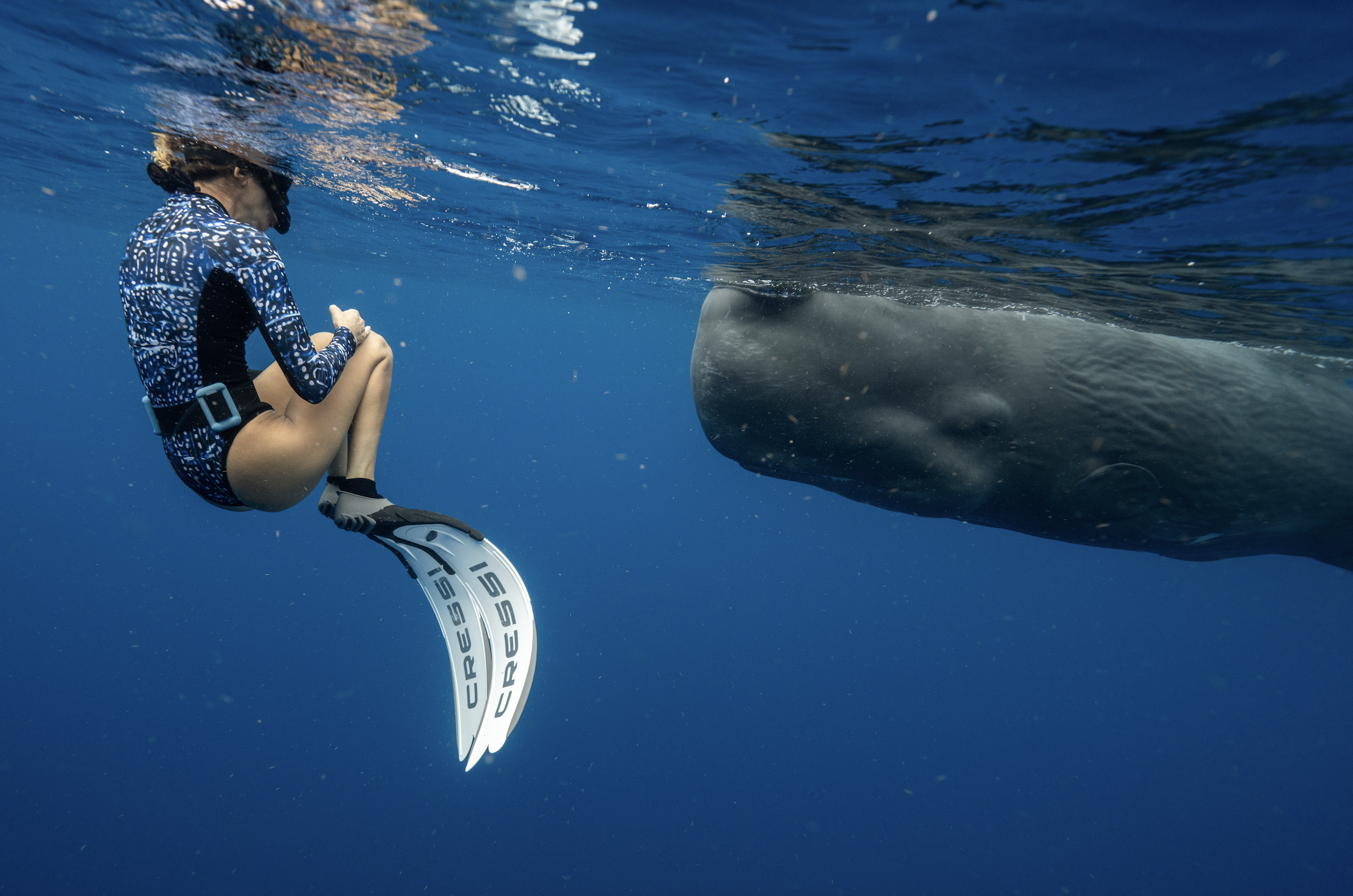
SAM MOSTAFA
GUIDE AND WHALE RESEARCHER
Dr. Sam is a veterinarian and sperm whale naturalist, and the research half of Big Tooth. She earned her DVM in Dominica in 2026, with clinical rotations in marine mammal pathology, zoo medicine and exotic animal medicine, and spent those student years on the water with the island's resident whales. Her doctoral research measured endoparasite prevalence across that population using non-invasive diagnostics, working out what these whales carry without ever putting a hand on one. Originally from New Jersey, she now practises small animal medicine in Puerto Rico and returns to Dominica every season, where she runs the hydrophone and in-water guiding.
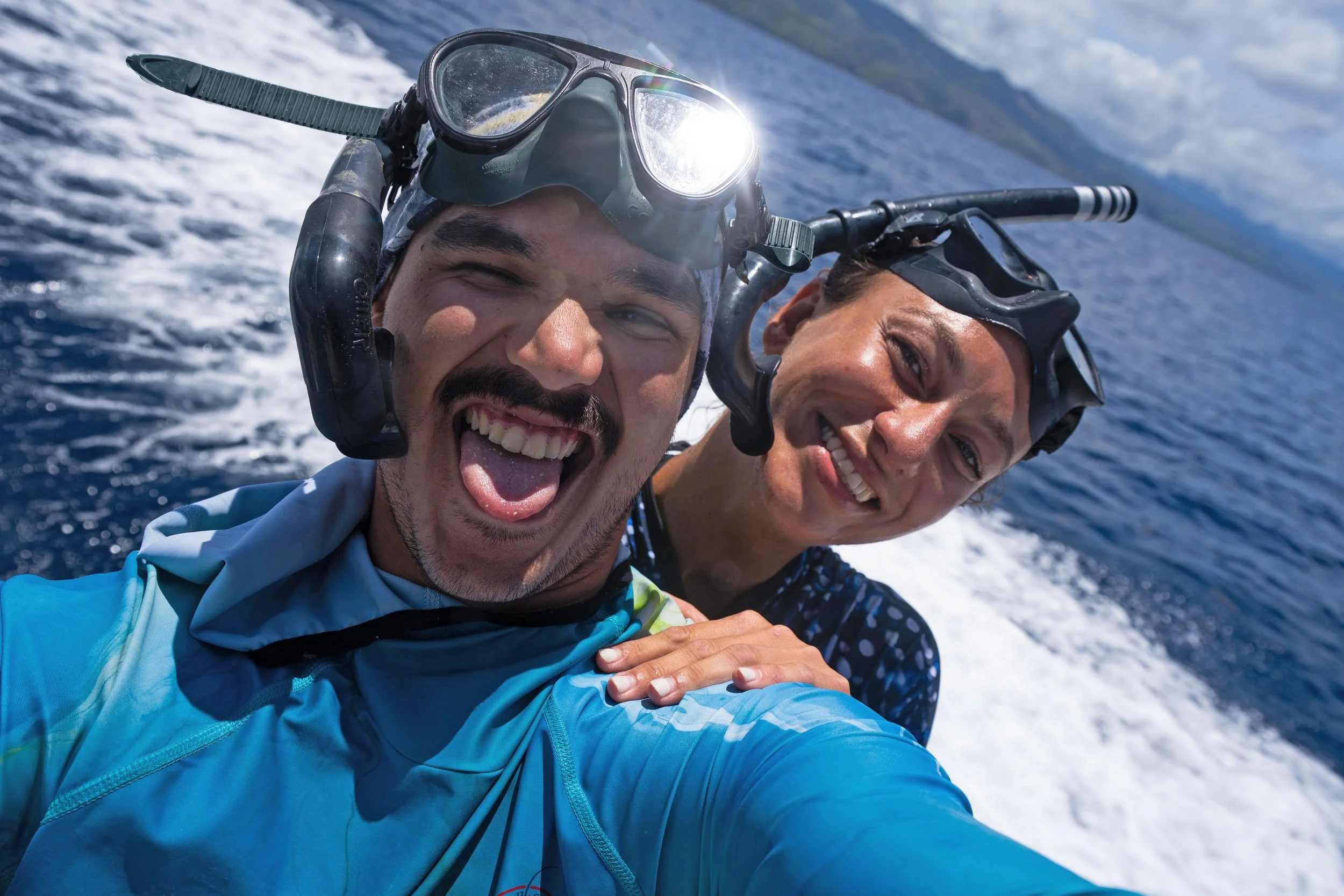
ELIAS OUAGHRIB
expedition lead
Elias is a passionate wildlife guide with experience across Dominica, Mexico, Norway, Florida, and French Polynesia. Since joining the team, he has brought an infectious enthusiasm for wildlife, culture, and adventure, sharing meaningful encounters with travellers from around the world. What sets Elias apart is his genuine curiosity and joy in observing animals in their natural habitat and high energy he brings to guests with each encounter. Originally from Belgium, and fluent in Dutch, French, German, English, and Spanish, with a touch of Arabic, he connects easily with people from all backgrounds.
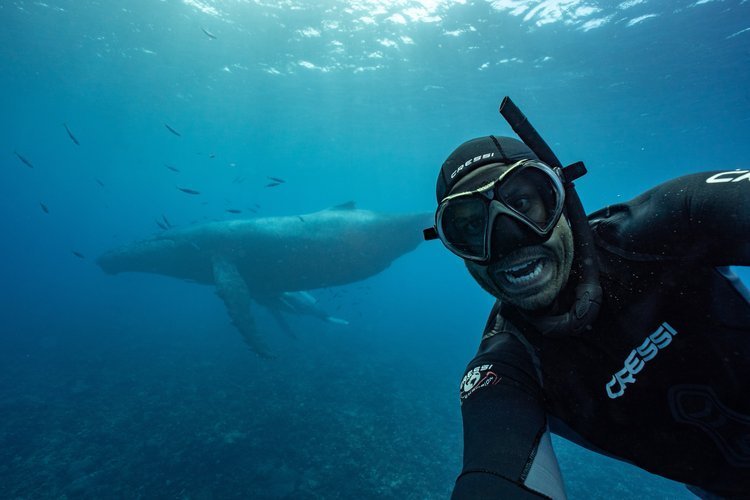
JAMIE LALLY
Expedition lead
Jamie, originally from England, is a nature and adrenaline lover who has been guiding wildlife and ocean expeditions since 2017, and joined the team in Rurutu in 2022 and Dominica in 2025. He came to us from Baja California, where he worked with whales, sharks, dolphins, manta rays, and sea lions. A Certified Divemaster and Freediver, he is as comfortable beneath the waves as above them. What sets Jamie apart is how easily he reads people. His humour keeps spirits high and his laid-back manner settles everyone, whether it is their first time in the water or their fiftieth.
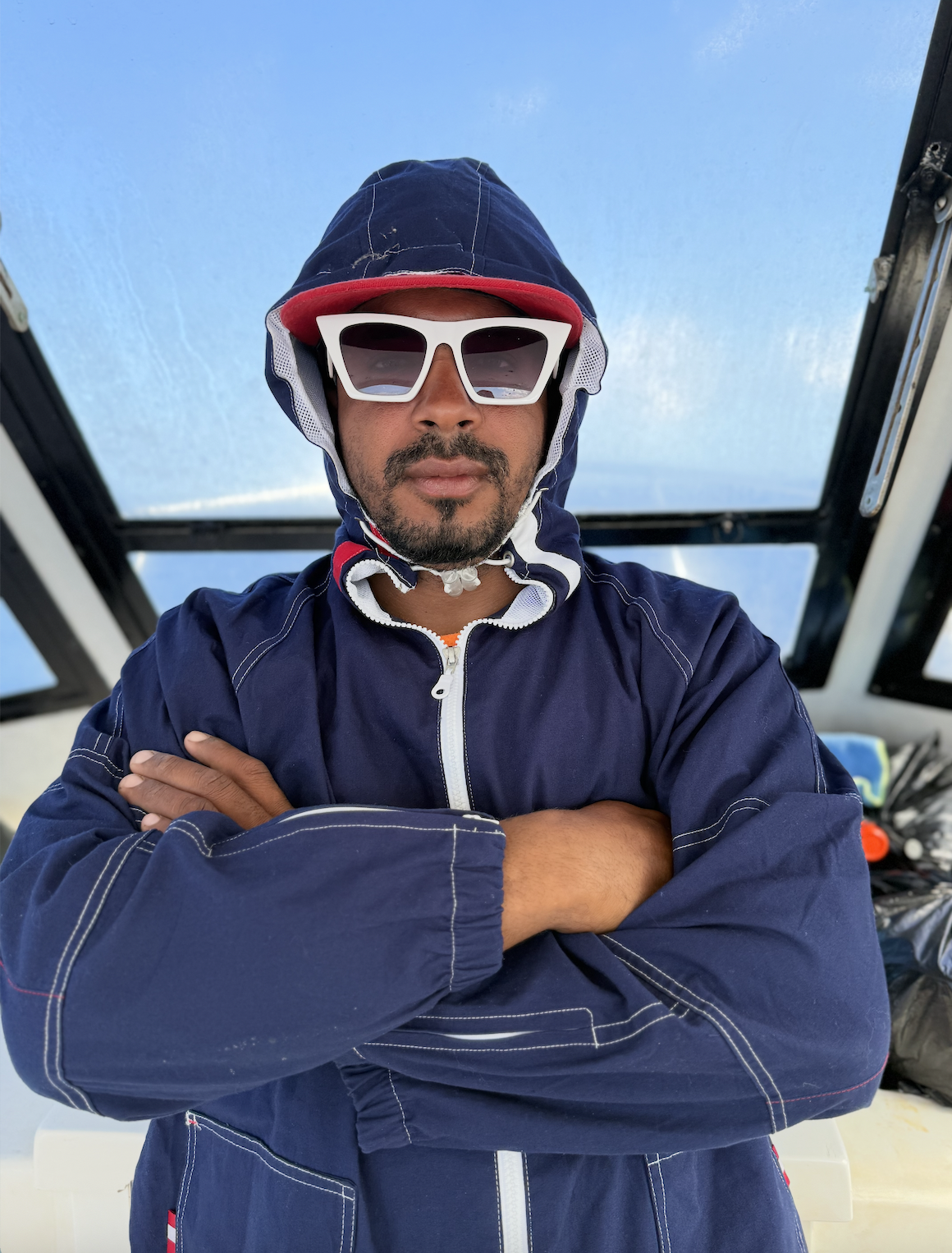
Yordany Tavarez
Captain and hydrophone tech
Yordani was born in the Dominican Republic and came to Dominica as a teenager, when his father, a commercial fisherman, moved the family across. He has spent his life on the water and trained as a captain from the start. In 2024 he began learning the hydrophone, which is the harder half of the job. Roughly 90% of finding a sperm whale is done by ear, and it takes years before the sound starts meaning anything. He took over as captain in 2025, and now runs the boat days that everything else on the trip depends on.
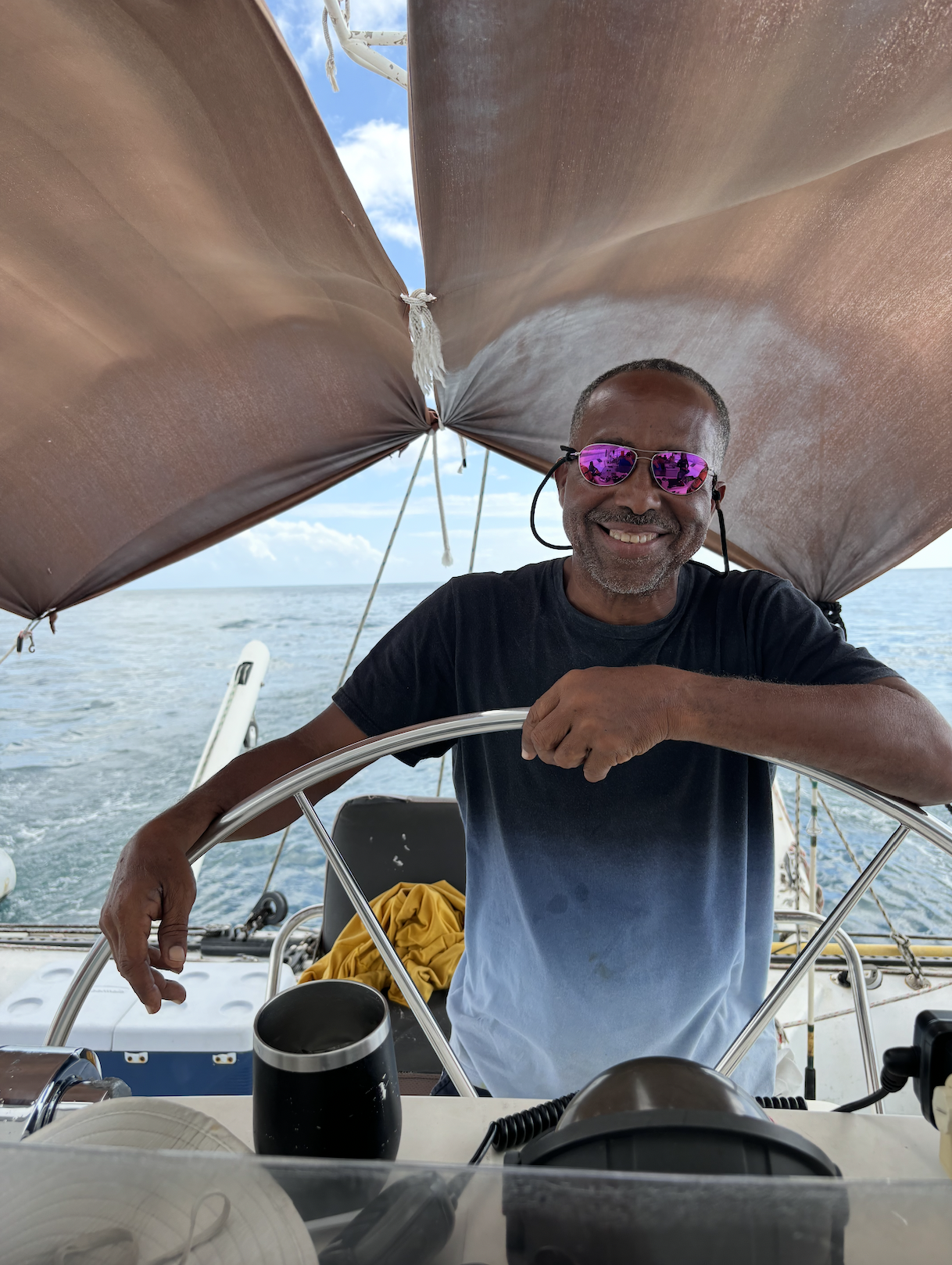
Andrew Armour
Captain and Whale Whisperer
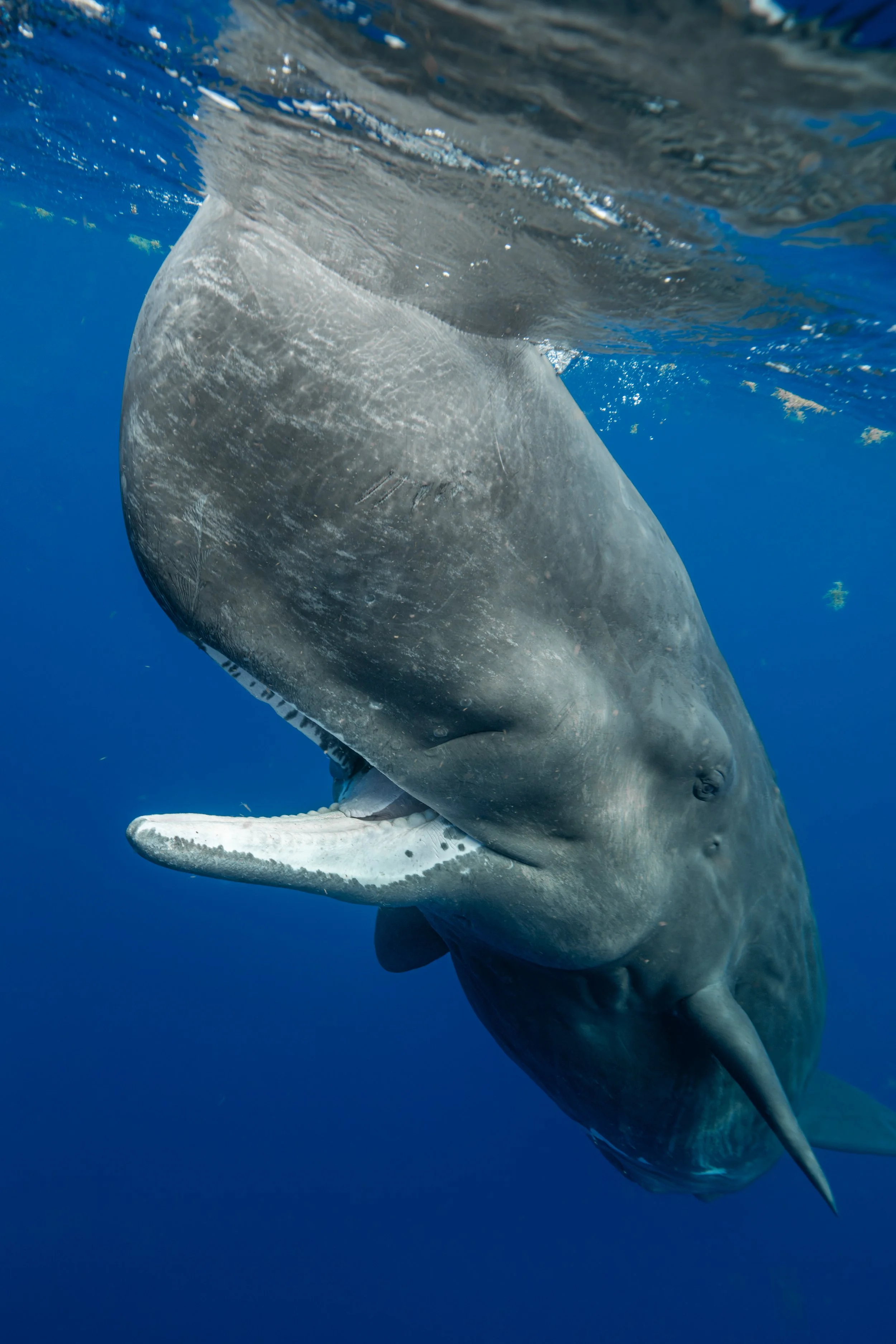
Andrew is from Dominica and has spent his working life with the sperm whales. In the early 1990s he became the first local captain to approach and document them. Nobody was doing it then. He is widely known as the Whale Whisperer, and has been the subject of documentary coverage including a Channel 4 film. He is best known for his relationship with a male sperm whale called Scar, first found as an injured calf, whose tolerance of people in the water Andrew credits with opening the door for the rest of the population. Now in his sixties, he is still out there.
Our approach
REGULATIONS and permits
Dominica caps how many boats may put people in the water, and every guest is named on a permit. Six per trip. Three in the water at a time with one guide. The boat holding fifty metres off. These are legal limits with penalties behind them, not house preferences, and we would run the same numbers if they were not, which is why no matter where we go we will keep to the same restrictions in Dominica.
Dominica’s swim-with permit is expensive and limiting. The permit alone in 2026 costs $6000 USD per 10-days, and is looking likely to double to $12,000 USD for 2027 (unconfirmed). This is one of the major reasons why Dominica expeditions are so pricey, but also why we don’t see the level of boat traffic or in water tourism in other places.
IN-WATER entries
We enter quietly, quietly and ahead of the animal's line, never behind it and never on top of it, and never directly in front of it’s head as to change its path. Nobody kicks hard. Nobody dives down.
Our guides read the surface behaviour before anyone gets wet and then keep a very calm line to assess the animal’s tolerance of us in the water. If everything is calm, we can swim alongside it maintaining a 5 metre space, and allow the whale to control the interaction. The best interactions are the ones that are not forced and stay on the whales’ terms.
Chasing. We never want to chase, herd, or cut off a moving unit. The best interactions are always on the whales’ terms. Humans will never out-swim a whale, and once the whales get ahead of us, its better to reset than to try to keep up. Sperm whales are also very sensitive to pressure changes in the water and will feel you following them.
Sound baiting. We don’t Use playback or any acoustic lure to draw whales in. Our sound devices are purely for listening. With a hydrophone our experts can determine the whales’ behaviour, number of animals, distance, depth and directional movement.
Dive. We don’t allow for any diving down on an animal, or approach from below without positive initial contact. Even shallow dives are completely conditional and normally discouraged unless we have a very engaging unit with us.
Touch. Yes, the whales (calves and juveniles) occasionally do try to touch humans, in that situation, the guide will get in front to calmly redirect the whale if necessary.
Stay when they have told us to go. We can easily read avoidant behaviour. Whales changing directions as soon as we enter the water, whales using their tails in a sideways motion, whales diving prematurely. We read these behaviours and don’t pursue when our presence is a clear disturbance.